1
🌿
Meet the plant
A compact woody perennial with tiny aromatic leaves. Thyme is well adapted to bright, dry conditions and low-water Mediterranean environments.

Thymus vulgaris
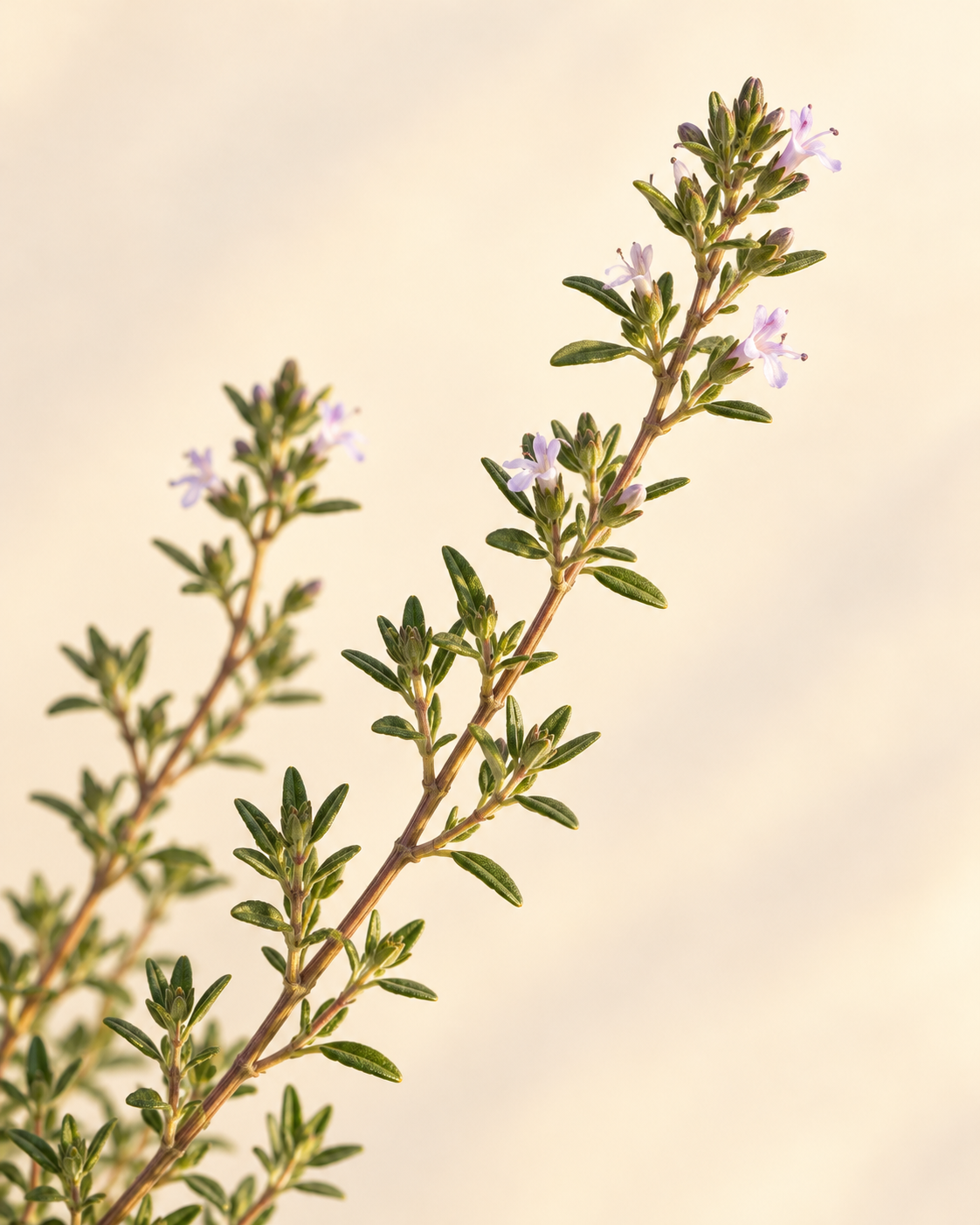
A compact woody perennial with tiny aromatic leaves. Thyme is well adapted to bright, dry conditions and low-water Mediterranean environments.
Common thyme is native to the western Mediterranean region, where it grows in sunny, stony ground and other free-draining habitats.
Used in cooking, fragrance, and traditional herbal practice for centuries, thyme remains a staple herb in Mediterranean and European cuisines.
Its very small leaves reduce exposed surface area, while aromatic oils and woody growth help it tolerate heat and periodic dryness.
Thyme prefers to dry between irrigations and is vulnerable to persistently wet, poorly aerated roots. Containers should drain freely.
Expect a slow, relatively shallow water-use pattern compared with lush herbs such as basil or mint. Long periods of little weight change may be completely normal.
The genus name Thymus has ancient roots and has long been associated with aromatic plants used in food, ritual, and medicine.